












The business side of things has witnessed numerous evolutions in recent times, but one which marked the most significant turn in its journey would be the introduction of fintech as a concept. For better understanding, fintech combines your conventional financial dynamics with new-age technology to manufacture unprecedented outcomes ranging from new apps and processes to business models and overarching ideologies. These components, once conceived, aim to enhance the reality across domains like banking, payments, investing, insurance, and more. In order to traverse such a wide expanse, fintech also offers you a host of different archetypes.
Talk about the said archetypes on a slightly deeper level, we begin from digital banks that bring to your disposal benefits like improved user verification, along with blockchain-driven ledgers known for facilitatingcomplex, multiparty transactions in a secure manner. Popularly known as neobanks, these new-age enterprises also offer greater flexibility in the context of account creation, credit disbursement, and more, thus offering an attractive proposition for the future.
The next flagbearer of this global fintech revolution translates to digital payments. As sending and receiving payments through digital channels is significantly less burdensome and more cost-efficient, the adoption of this particular technology has clocked a steep rise. In fact, within North America alone, the volume of non-cash transactions volume increased from $1.4 billion in 2023 to $1.6 billion in 2024, showcasing a substantial14% increase.
Then, there is the prospect of streamlined finance management solutions. Gone are the days when one had to struggle with handling multiple accounts. Today, you can bank upon various personal finance tools to access a unified view of your financial posture, tools that can help users manage, budget, and better utilize their money. Not just a passive lowdown, the modern generation can also tap into various platforms, capable of accommodating their personal financial goals and then generating tailored advice.
Another iteration which is making a strong case for fintech adoption is served up by the advent of digital lending tools. In the past, lenders had to toil a lot to conceive a complete and accurate picture of their applicants, a by-product of the average work and time it would take to collect all the relevant income information, account balances, and asset history. In case that wasn’t bad enough, the very process of getting borrowers to connect their bank accounts for receiving and repaying loans has also emerged as a tedious affair. Against the given bottleneck, fintech lenders deliver a setup focused on using technology to eliminate operational inefficiencies, and at the same time,providing more consumer-friendly loan options, such as peer-to-peer loans. From the lenders’ standpoint, the digitalization of this process has ensured that they can seamlessly procure user-permissioned bank, payroll, and other data before reaching a decision. This involves a more straightforward take on verifying borrowers’ identity, assets, employment, and income, while simultaneously authenticating their accounts, checking balances in real-time, and validating financial obligations.
Building upon that, the investment business, as a whole, has also extracted enormous value from fintech. We get to say so because the stated transformation has walked a long distance to democratize investment avenues for the common retail investor. For instance, the arrival of digital stock broker platforms has enabled every individual to easily open a demat account and invest in stocks or mutual funds.
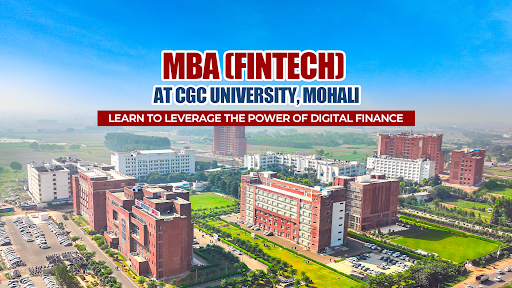
Having talked at length regarding the benefits of fintech, we now must turn our attention towards Why You Should Pursue an MBA (Fintech) at CGC University, Mohali?
Provided in collaboration with KPMG, the MBA in Fintech at CGC University is one industry-oriented program, which provides youKPMG-certified modules, case studies, and simulation-based learning that bridges theory with industry practice. More on the available company-backed modules would reveal how they include Blockchain, Financial Data Analytics, Digital Banking, and RiskTech. Anyway, alongside that, you can also scale up your education through a smart infrastructure, spanning state-of-the-art research labs, specialized simulation labs, dedicated skill development zones, as well as fully-automated workshop centers. Complementing that would be the access to extensive placement support, led by KPMG’s global consulting network and corporate relationships. On the other hand, CGC University’s Career Services Division will dispatch placement mentoring, case interview training, and soft-skill enhancement sessions.As for the roles you can pursue after completing your degree, they are understood to include Financial Analyst,FintechProduct Manager, Investment Banker, Crypto Investment Director, Risk Manager, Compliance Manager, Wealth Manager, and Financial Consultant, etc.
Beyond placement support, CGC University, Mohali, also makes a point to foster that entrepreneurial instinct among students through initiatives like VentureNest, where anyone can come, pitch their dream business idea, and stand a chance to secure the required funding. At present, CGC is supporting more than 40 start-ups, with over six of them now officially recognized by the nationwide Start-up India program. A total of greater than 10 start-ups are also recording revenue worth 50 lakhs+ on a consistent basis.
CGC University, Mohali, markedly provides you with these career opportunities without putting any financial burden on your shoulders, thanks to our leading scholarship program i.e. CGCUET. Offering a pool of upto 50 Cr., CGCUET presents a meritorious mechanism to help the brightest minds out there realize their potential as smoothly as possible.
Frequently Asked Questions
Q. What is Fintech?
Ans. Fintech is a strategic blend of financial nuances and modern-day technology, geared towards unlocking smarter outcomes across the commercial landscape.
Q. Which areas can benefit the most from Fintech?
Ans. Banking, payments, investing, insurance, and other related sectors currently have the maximum exposure to core fintech discipline.
Q. What core subjects are you likely to cover over the course of your program?
Ans. Students enrolled in this program can come expecting to learn about the digital banking ecosystem, digital payments, blockchain technology, investment management, wealth management, and more.
Q. What roles can you pursue after completing your MBA (Fintech) degree?
Ans. Management aspirants who have completed their degree in MBA (Fintech) can go for roles like Financial Analyst, Fintech Product Manager, Investment Banker, Crypto Investment Director, Risk Manager, Compliance Manager, Wealth Manager, and Financial Consultant. etc.