











Introduction
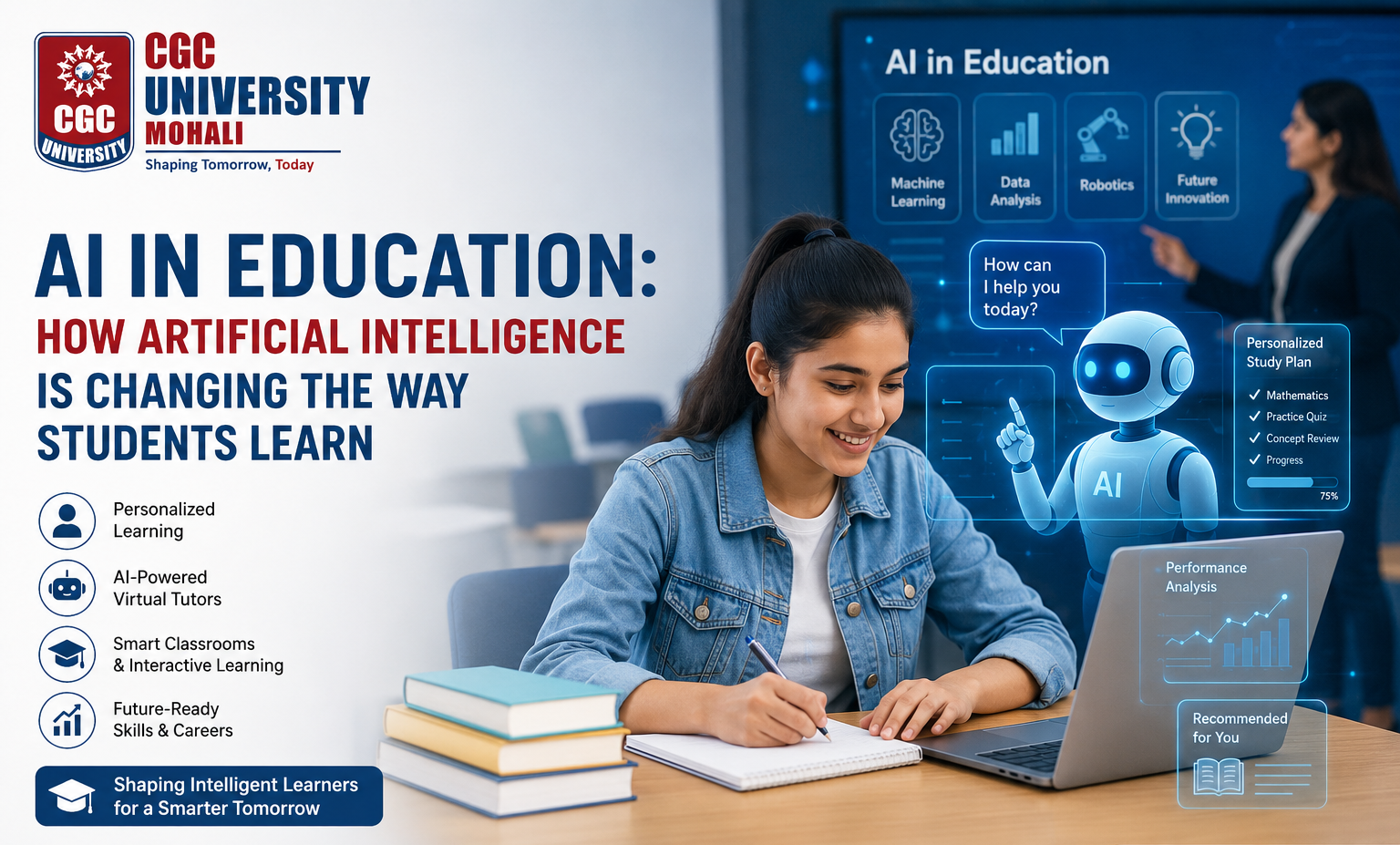
Artificial Intelligence is no longer merely a futuristic idea; it has become a key component of contemporary education. AI is reshaping how students acquire knowledge and build skills, through innovations like smart classrooms, virtual tutors, and personalized learning platforms. Today, universities are also launching forward-looking programs such as B.Tech. CSE in AI and ML to equip students for careers in intelligent technologies. As education increasingly relies on technology, AI is enabling students to learn more quickly, think more critically, and better equip themselves for the demands of the digital age.
Understanding AI in Education
What Does AI Mean in Learning?
Artificial Intelligence in education refers to the use of intelligent computer systems that can analyze information, solve problems, and support students throughout their learning journey. Unlike traditional education, AI-powered systems understand a student's learning pattern and provide customized recommendations to improve performance.
Whether it's an online learning platform suggesting practice questions or an AI chatbot answering academic queries instantly, these technologies make learning more efficient and interactive. Instead of following a one-size-fits-all approach, AI ensures that every student receives a learning experience suited to their individual needs.
Personalized Learning for Better Academic Performance
Learning at Your Own Pace
Every student has different strengths, weaknesses, and learning speeds. Some understand concepts quickly, while others need additional practice. Artificial Intelligence helps bridge this gap by creating personalized learning experiences.
AI-based learning platforms monitor student progress, identify areas where improvement is needed, and recommend suitable study materials. Students receive customized quizzes, assignments, and revision plans based on their performance. This approach reduces learning pressure and allows students to gain confidence while improving their understanding of difficult topics.
Personalized learning also encourages students to become independent learners by helping them focus on concepts they need to strengthen rather than repeating topics they already know well.
Smart Classrooms Are Changing Education
Making Learning More Interactive
Traditional classrooms are gradually evolving into smart learning environments with the help of Artificial Intelligence. Interactive presentations, AI-powered virtual assistants, digital whiteboards, and intelligent assessment tools are making classroom sessions more engaging.
Students can participate in real-time quizzes, receive instant feedback, and interact with simulations that explain complex concepts in a simple manner. AI also supports virtual laboratories where students can safely perform experiments and understand practical applications without limitations.
These modern teaching methods increase student participation and make learning enjoyable instead of stressful.
How AI Supports Teachers
Improving Teaching Efficiency
Artificial Intelligence is not replacing teachers—it is making their work more effective. Many routine tasks such as grading assignments, preparing reports, tracking attendance, and evaluating student performance can now be automated using AI.
This allows teachers to spend more time mentoring students, explaining concepts in detail, and encouraging classroom discussions. AI-generated reports also help educators identify students who may require additional academic support, enabling timely intervention.
By reducing administrative workload, AI allows teachers to focus on delivering high-quality education and creating meaningful learning experiences.
Building Careers Through AI Education
Preparing Students for Future Job Opportunities
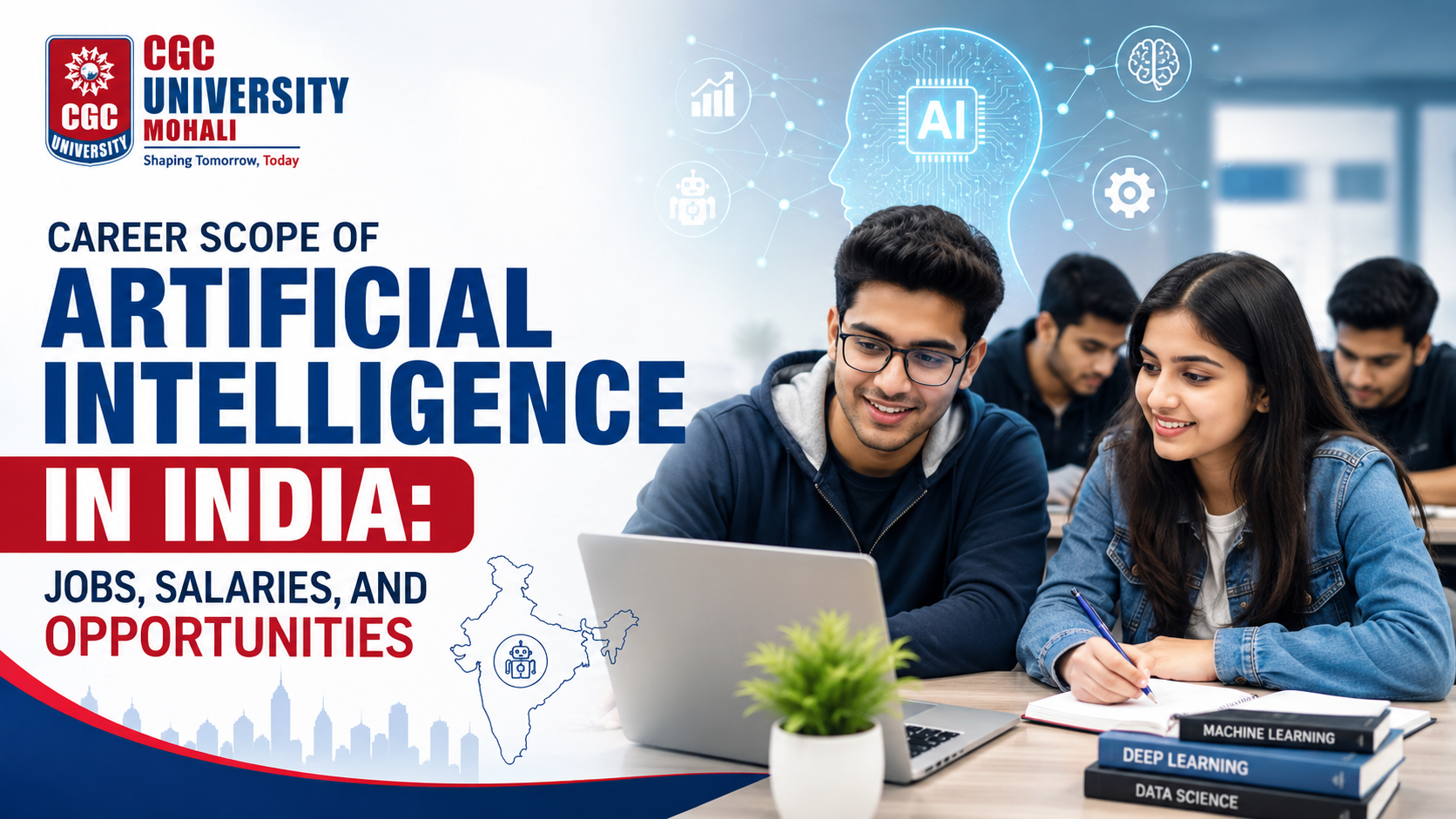
Artificial Intelligence is creating career opportunities across industries including healthcare, banking, finance, retail, manufacturing, cybersecurity, education, and transportation. As organizations continue to adopt AI technologies, the demand for skilled professionals is increasing rapidly.
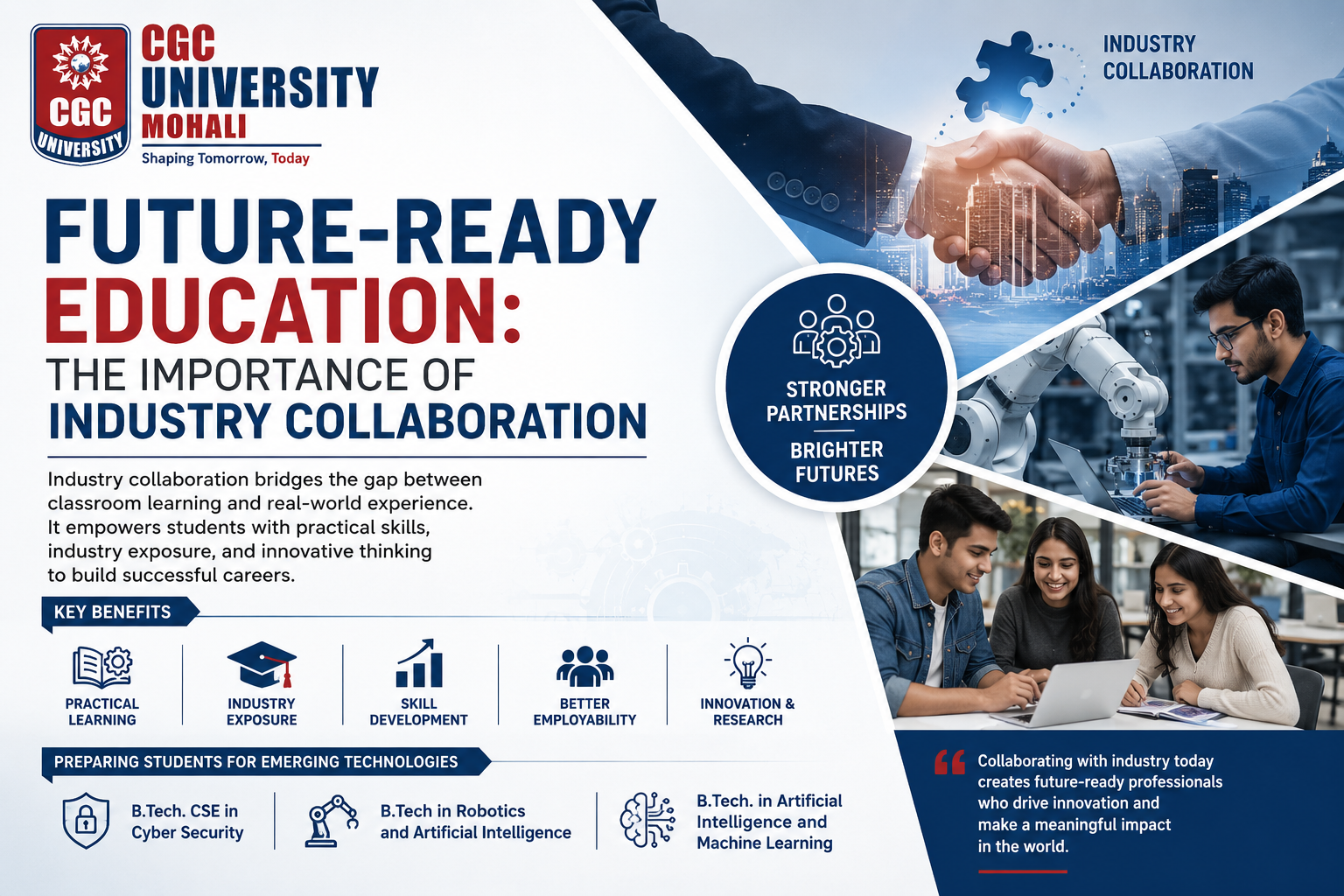
Students interested in advanced technologies are choosing specialized programs like B.Tech. CSE in AI and Robotics, where they learn about machine learning, robotics, intelligent automation, computer vision, and data-driven technologies. These programs combine theoretical knowledge with practical learning to prepare students for emerging careers in the global technology industry.
Developing AI skills today helps students stay competitive in tomorrow's job market.
Benefits of AI for Students
Why AI Makes Learning Better
Artificial Intelligence offers several advantages that improve both academic performance and the overall learning experience.
Some major benefits include:
-
Personalized study plans based on individual performance.
-
Instant feedback on assignments and assessments.
-
Better understanding through interactive learning tools.
-
Access to learning resources anytime and anywhere.
-
Improved time management with smart scheduling.
-
Enhanced problem-solving and critical thinking skills.
-
Better preparation for technology-driven careers.
These advantages make education more flexible, engaging, and effective for learners of all backgrounds.
Challenges of AI in Education
Finding the Right Balance
While AI offers numerous benefits, responsible implementation is equally important. Educational institutions must ensure data privacy, cybersecurity, and ethical use of Artificial Intelligence.
Students should also continue developing creativity, communication, teamwork, emotional intelligence, and leadership skills. AI can assist in learning, but it cannot replace human interaction, classroom discussions, or the guidance provided by experienced educators.
The most effective education combines technological innovation with strong human values.
The Future of AI in Education
A New Era of Smart Learning
The future of education will become even more intelligent as AI technologies continue to advance. Virtual reality classrooms, AI tutors, adaptive examinations, intelligent career counseling, predictive analytics, and immersive learning experiences will become increasingly common.
Universities are continuously updating their curriculum to include emerging technologies so that students graduate with industry-relevant skills. Learning will become more flexible, personalized, and career-oriented, enabling students to succeed in a rapidly changing world.
AI will continue to play a major role in shaping the future of higher education and lifelong learning.
Why Choose CGC University?
Preparing Students for Tomorrow's Technology
CGC University,mohali is committed to providing future-ready education through innovation, practical learning, and industry-focused academic programs. We offer experienced faculty, advanced laboratories, modern infrastructure, industry collaborations, research opportunities, internships, and skill development initiatives that help students build successful careers. Our learning environment encourages innovation, critical thinking, and hands-on experience, ensuring graduates are well prepared to meet the demands of emerging technologies and global industries.
Conclusion
Artificial Intelligence is transforming education by making learning smarter, more personalized, and highly interactive. It empowers students with better learning experiences while helping teachers deliver more effective education. As AI continues to reshape industries worldwide, students who develop knowledge and practical skills in emerging technologies will have a significant advantage in their careers. By embracing innovation today, learners can prepare themselves for the opportunities of tomorrow and become confident professionals in an increasingly technology-driven world.