











Technology is evolving faster than ever, and industries today need engineers who can adapt to smart systems, automation, communication networks, and emerging digital innovations. Students looking for future-focused education often search for the best BTech ECE university in Chandigarh to gain industry-ready skills, practical exposure, and strong career opportunities in the rapidly growing technology sector.
Electronics and Communication Engineering (ECE) is no longer limited to traditional electronics. Modern ECE programs now combine communication systems, embedded technologies, automation, Artificial Intelligence, IoT, robotics, and smart devices. With industries moving toward digital transformation and connected technologies, ECE has become one of the most dynamic engineering fields for students interested in innovation and advanced technology.
Why ECE is Important in the Modern Technology Era
From smartphones and satellites to electric vehicles and smart homes, Electronics and Communication Engineering powers almost every modern innovation. Industries across healthcare, aerospace, telecommunications, manufacturing, automotive, and IT rely heavily on communication systems and intelligent electronic devices.
ECE students gain knowledge in areas such as:
- Digital Electronics
- Embedded Systems
- Internet of Things (IoT)
- Robotics & Automation
- Signal Processing
- Wireless Communication
- VLSI Design
- Microprocessors & Microcontrollers
- AI-Integrated Communication Systems
These technologies are shaping Industry 4.0 and creating massive career opportunities for skilled engineers.
The Growing Demand for Next-Generation Engineering Skills
Today’s employers look beyond theoretical knowledge. Companies want engineers who can solve practical problems, work on live technologies, and understand future-driven systems.
Modern engineering education focuses on:
- Hands-on technical learning
- Innovation and research
- Coding and hardware integration
- AI-enabled technologies
- Real-world project development
- Industry certifications
- Interdisciplinary learning
This is why students now prefer universities that combine ECE with modern technological advancements like Artificial Intelligence, Robotics, and IoT.
Practical Learning Creates Industry-Ready Engineers
Engineering becomes more effective when students learn through practical experiences instead of only classroom lectures. A future-focused ECE program should encourage students to work on real-world projects, simulations, prototypes, and innovation-driven learning models.
Important practical learning components include:
Advanced Laboratories
Modern labs help students understand communication systems, embedded technologies, automation tools, and circuit design through experimentation and practical exposure.
Live Projects & Internships
Internships and project-based learning provide industry understanding and help students gain confidence before entering professional careers.
Technical Workshops & Hackathons
Participation in coding competitions, robotics events, innovation challenges, and technical workshops improves problem-solving and teamwork abilities.
Industry Exposure
Interaction with industry experts and corporate collaborations allows students to understand current market trends and future technologies.
The Role of AI, IoT & Robotics in ECE
The future of engineering is closely connected with intelligent systems and automation. This is why universities are integrating advanced technologies into engineering programs to help students stay ahead in the competitive world.
Artificial Intelligence (AI)
AI is transforming communication systems, automation, healthcare devices, and smart technologies. ECE students with AI knowledge can work on machine learning systems, smart communication networks, and intelligent automation.
Internet of Things (IoT)
IoT connects devices through the internet, enabling smart homes, smart cities, industrial automation, and wearable technologies. ECE students gain opportunities to work on sensor-based systems and connected devices.
Robotics & Automation
Robotics is becoming a major part of industries like manufacturing, healthcare, defense, and automotive engineering. Students interested in intelligent machines and automation systems benefit greatly from robotics-focused learning.
Programs like B.Tech CSE Robotics and AI are also becoming highly popular because they combine software intelligence with robotics and automation technologies, opening new career opportunities for students interested in futuristic innovations.
Career Opportunities After BTech ECE
One of the biggest advantages of pursuing ECE is the wide variety of career options available across industries. Students can explore careers in both core electronics sectors and IT-driven companies.
Popular career opportunities include:
- Electronics Engineer
- Embedded Systems Engineer
- Robotics Engineer
- IoT Developer
- Telecom Engineer
- Network Engineer
- Automation Engineer
- Signal Processing Engineer
- AI Systems Engineer
- VLSI Design Engineer
As industries continue adopting smart technologies and automation, the demand for skilled ECE professionals is expected to grow significantly in the coming years.
Skills Students Develop During BTech ECE
A quality ECE program helps students build both technical and professional skills required in the modern engineering world.
Technical Skills
- Circuit Design
- Programming Basics
- Embedded Systems Development
- Communication Technologies
- Automation & Robotics
- AI & IoT Applications
Professional Skills
- Critical Thinking
- Problem Solving
- Team Collaboration
- Communication Skills
- Innovation Mindset
- Project Management
These skills help students become industry-ready professionals capable of handling future technological challenges.
Choosing the Right University Matters
Selecting the right university is one of the most important decisions for engineering aspirants. Students should look for institutions that provide:
- Industry-oriented curriculum
- Modern infrastructure
- Experienced faculty
- Innovation-driven learning
- Internship opportunities
- Placement support
- Research and development exposure
- Skill-based education
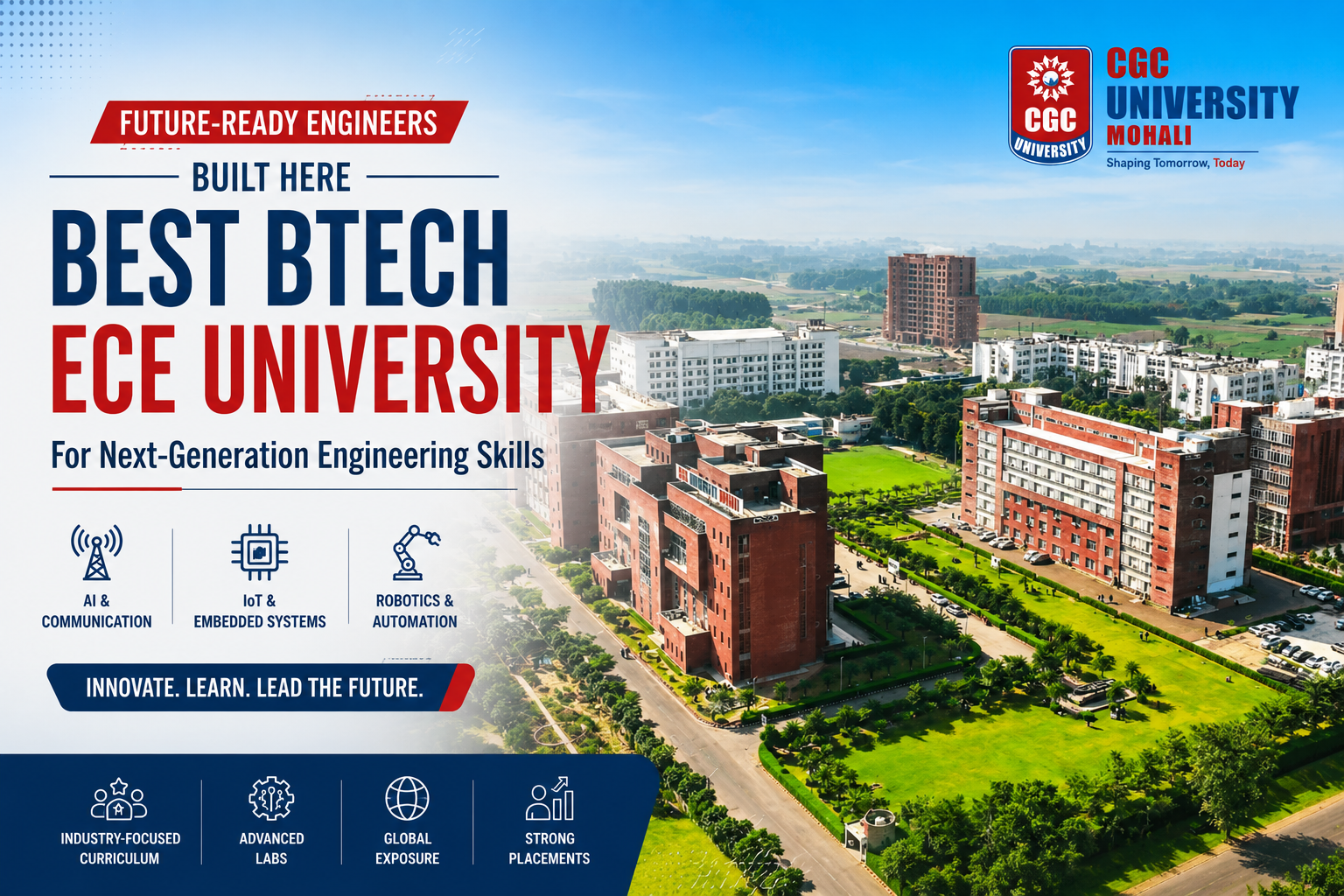
CGC University offers a future-focused learning environment where students gain technical expertise, practical exposure, and opportunities to explore emerging technologies like AI, IoT, Robotics, and Automation. Through modern labs, innovation centers, industry collaborations, and career-focused training, students can build strong foundations for successful engineering careers.
Conclusion
Electronics and Communication Engineering is rapidly evolving with the integration of AI, IoT, robotics, and smart technologies. Students who want to become future-ready engineers should choose a university that combines academic excellence with practical learning, innovation, and industry exposure.
A strong ECE program not only builds technical knowledge but also develops creativity, problem-solving abilities, and professional confidence. With the right guidance, modern infrastructure, and emerging technology exposure, students can create successful careers in today’s fast-changing digital world.
FAQs
1. What are the career opportunities after BTech ECE?
Students can work as Electronics Engineers, IoT Developers, Robotics Engineers, Telecom Engineers, Embedded Systems Engineers, Automation Engineers, and AI Systems Professionals across multiple industries.
2. Is ECE a good branch for future technologies?
Yes, ECE is highly connected with future technologies like AI, IoT, Robotics, 5G Communication, Automation, and Smart Devices, making it one of the most promising engineering branches.
3. What skills are important for ECE students?
ECE students should develop technical knowledge, coding skills, communication abilities, problem-solving skills, innovation mindset, and practical project experience.
4. Why is practical learning important in BTech ECE?
Practical learning helps students understand real-world applications, improve technical expertise, and gain industry exposure through labs, projects, internships, and workshops.
5. What is the difference between ECE and Robotics & AI programs?
ECE focuses on electronics, communication systems, embedded technologies, and automation, while programs like B.Tech Computer Science and Engineering Robotics and Artificial Intelligence focus more on intelligent systems, machine learning, robotics programming, and AI-driven technologies.