











Artificial Intelligence is not just a futuristic idea from science fiction anymore. Today, AI is part of daily life and is changing how industries function worldwide. From smartphones and virtual assistants to healthcare systems and smart factories, AI technologies are altering how businesses work and how people tackle problems. This quick change is also creating a significant need for engineers who understand AI and current digital technologies.
As industries shift toward automation and intelligent systems, students are seeking career-focused programs that can prepare them for the future. Courses such as BTech CSE AI ML, BTech AI Data Science, and BTech Robotics AI are growing in popularity. These programs blend engineering basics with current AI technologies that companies need.
For future engineers, learning AI is no longer optional. It is an important skill that can help students build strong careers, keep up with changing technologies, and stay ahead in the competitive job market.
The Growing Importance of AI in Modern Engineering
The way engineering is done has changed a lot over the past decade. In the past, engineers mainly focused on building systems, machines, and software using traditional techniques. But now, industries expect engineers to design smart systems that can think, analyze data, automate processes, and improve efficiency with little human help. Artificial Intelligence helps machines process information, identify patterns, and make decisions faster than traditional systems. Because of this, AI is now used in almost every engineering field, such as: Earlier engineers majorly used to focus on traditional ways of designing systems, machines and software. Industries today expect engineers to develop intelligent systems that can think, analyze data, automate tasks and improve efficiency with minimum human involvement.
Artificial Intelligence enables machines to analyze data, recognize patterns, and make decisions faster than the traditional systems. Due to this, AI is now applied in nearly every engineering sphere like:
-
Software Development
-
Automobile Engineering
-
Healthcare Technology
-
Robotics and Automation
-
Cyber Security
-
Cloud Computing
-
Smart Manufacturing
-
Data Analytics
This growing integration of AI into industries is one of the biggest reasons why students are choosing specialized programs like BTech CSE Cloud Computing and BTech CSE Cyber Security to develop industry-ready skills.
Why Future Engineers Need AI Skills
The future workplace will rely heavily on automation, machine learning, and intelligent systems. Engineers who understand these technologies will have better career opportunities and stronger professional growth compared to those who only have traditional technical knowledge.
AI education helps engineering students:
-
Understand modern technologies
-
Improve logical and analytical thinking
-
Build smart applications and systems
-
Solve complex real-world problems
-
Work on industry-based projects
-
Increase innovation and creativity
Companies today prefer professionals who can work with modern tools and emerging technologies. Students with AI expertise often gain an advantage during placements because industries are actively searching for professionals with practical AI knowledge.
How AI Is Changing Different Engineering Fields
AI in Computer Science Engineering
Computer Science Engineering is one of the biggest fields influenced by AI. Modern software applications now use intelligent systems for automation, recommendation engines, data analysis, and customer experiences.
Students pursuing BTech CSE AI ML learn technologies such as:
-
Machine Learning
-
Deep Learning
-
Natural Language Processing
-
Python Programming
-
Neural Networks
-
Predictive Analytics
These skills help students build advanced software solutions and intelligent applications that are widely used in industries today.
AI in Robotics and Automation
The robotics industry is growing rapidly because companies want faster and smarter automated systems. AI-powered robots are now used in manufacturing plants, warehouses, healthcare, and even space research.
Students enrolled in BTech Robotics AI programs learn how AI helps machines make decisions, recognize patterns, and perform tasks automatically. This combination of robotics and AI is expected to create huge career opportunities in the future.
AI in Cyber Security
As digital systems continue growing, cyber threats are also increasing. Traditional security systems are often unable to handle advanced cyber attacks effectively. AI is helping cybersecurity experts detect threats, monitor suspicious activities, and improve digital safety.
This is why programs like BTech CSE Cyber Security are gaining strong popularity among students interested in technology and digital protection.
AI in Data Science and Analytics
Data has become one of the most valuable assets for businesses today. Companies use AI and data science to understand customer behavior, improve business strategies, and make faster decisions.
Students choosing BTech AI Data Science gain skills in:
-
Data Visualization
-
Predictive Analysis
-
Big Data Technologies
-
Business Intelligence
-
Statistical Modeling
These skills are highly valuable in sectors like finance, healthcare, e-commerce, and IT industries.
Benefits of AI Education for Engineering Students
Strong Career Opportunities
AI-related industries are creating thousands of new job opportunities every year. Engineers with AI expertise can work in multiple sectors, making their career options broader and more flexible.
|
Career Role |
Average Industry Demand |
Future Scope |
|
AI Engineer |
Very High |
Excellent |
|
Machine Learning Engineer |
High |
Rapid Growth |
|
Data Scientist |
Very High |
Excellent |
|
Robotics Engineer |
Growing Fast |
Future-Focused |
|
Cyber Security Specialist |
High |
Strong Demand |
|
Cloud Computing Engineer |
Very High |
Expanding Globally |
These career roles are expected to remain highly valuable for many years because AI adoption is increasing worldwide.
AI Improves Problem-Solving Skills
One of the biggest advantages of AI education is that it improves a student’s ability to solve real-world problems. Instead of focusing only on theory, AI encourages students to think practically and develop innovative solutions.
For example:
-
AI can help doctors detect diseases earlier
-
AI systems improve traffic management in smart cities
-
AI-powered machines increase manufacturing efficiency
-
AI chatbots improve customer service experiences
-
AI security tools detect cyber threats in real time
When students work on such technologies, they gain practical exposure and become more confident engineers.
The Connection Between AI and Future Technologies
Artificial Intelligence is closely connected with many advanced technologies that are shaping the future of engineering.
Cloud Computing
AI applications require large amounts of data storage and processing power. Cloud computing provides the infrastructure needed for AI systems to work efficiently. This is why BTech CSE Cloud Computing is becoming an important program for students interested in future technologies.
Internet of Things (IoT)
Smart devices like fitness trackers, smart homes, and industrial sensors use AI and IoT together to collect and analyze data automatically.
Blockchain Technology
AI and blockchain together help improve security, transparency, and automation in digital systems. Students exploring technologies like blockchain are also finding new opportunities in modern industries.
Why Practical AI Learning Matters
Modern industries do not only look for theoretical knowledge. Companies want engineers who can work on real projects, understand industry tools, and solve business challenges using technology.
Practical AI learning helps students gain experience in:
-
Live Projects
-
Coding Competitions
-
Industry Internships
-
Research Activities
-
Real-Time Application Development
This practical exposure helps students become industry-ready and improves their confidence before entering professional careers.
AI Education and Future Career Growth
AI education gives engineers the flexibility to work across multiple industries instead of being limited to one field. Engineers with AI skills can work in:
-
Software Companies
-
Healthcare Organizations
-
Financial Institutions
-
Research Labs
-
Automobile Companies
-
Automation Industries
-
Government Technology Projects
-
Startups and Tech Firms
Because AI is expanding rapidly, professionals with AI knowledge are likely to experience better career growth, higher salaries, and stronger global opportunities.
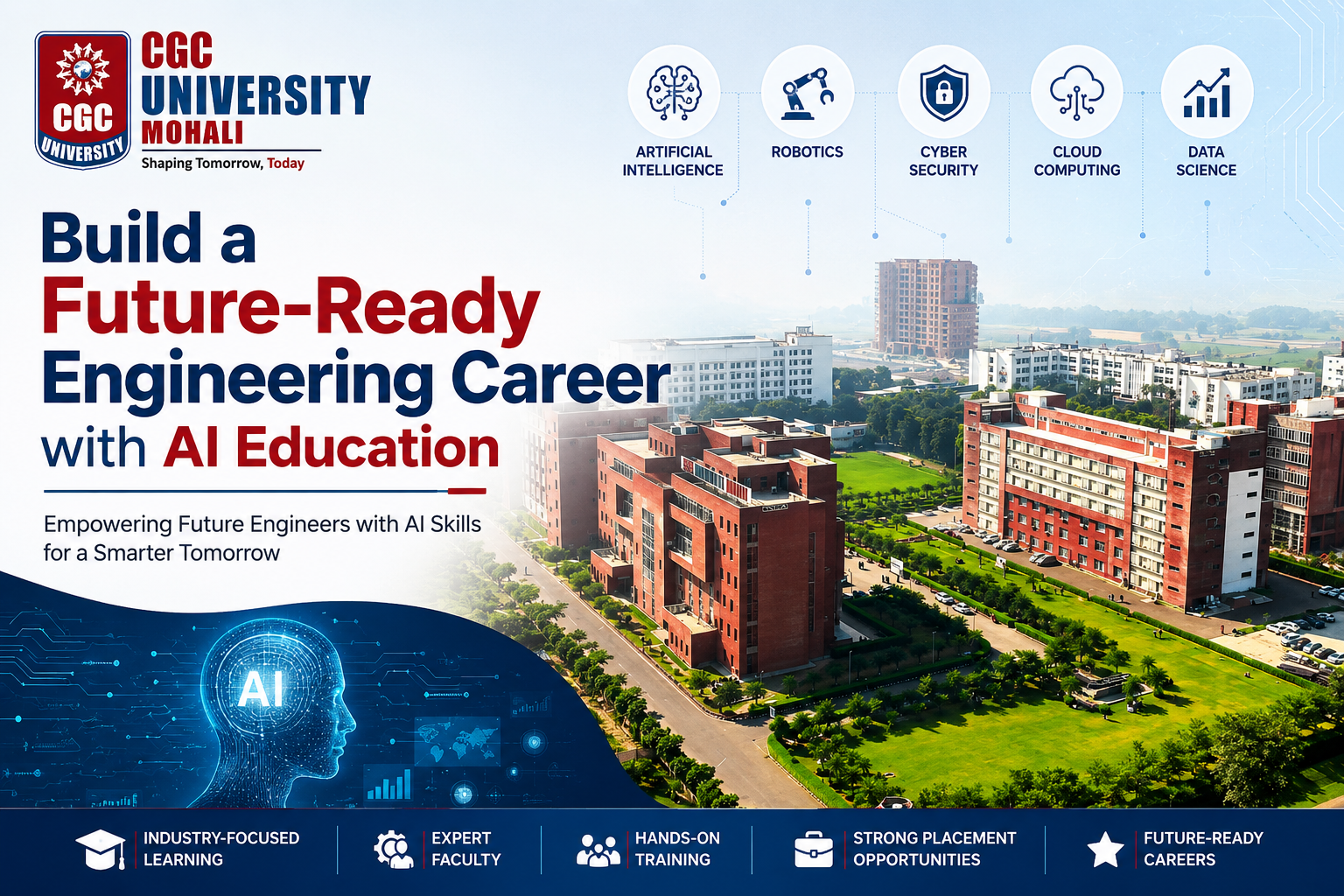
At CGC University, we are committed to providing industry-oriented education that helps students gain practical knowledge, technical expertise, and real-world exposure through advanced engineering programs, modern learning environments, hands-on training, live projects, internships, and future-focused specializations in Artificial Intelligence, Data Science, Robotics, Cloud Computing, and Cyber Security.
Conclusion
Artificial Intelligence is transforming industries across the world, and future engineers must be ready to adapt to this rapidly changing technological landscape. AI education helps students develop technical expertise, analytical thinking, innovation skills, and practical problem-solving abilities that are highly valued in modern industries.
Career-focused fields such as AI, robotics, cybersecurity, cloud computing, and data science are opening exciting opportunities for students who want to build future-ready careers. As industries continue adopting advanced technologies, engineers with AI knowledge will play an important role in developing smarter systems, solving real-world challenges, and driving innovation.
For students planning their engineering journey, learning AI today can become one of the smartest investments for long-term career growth and professional success.